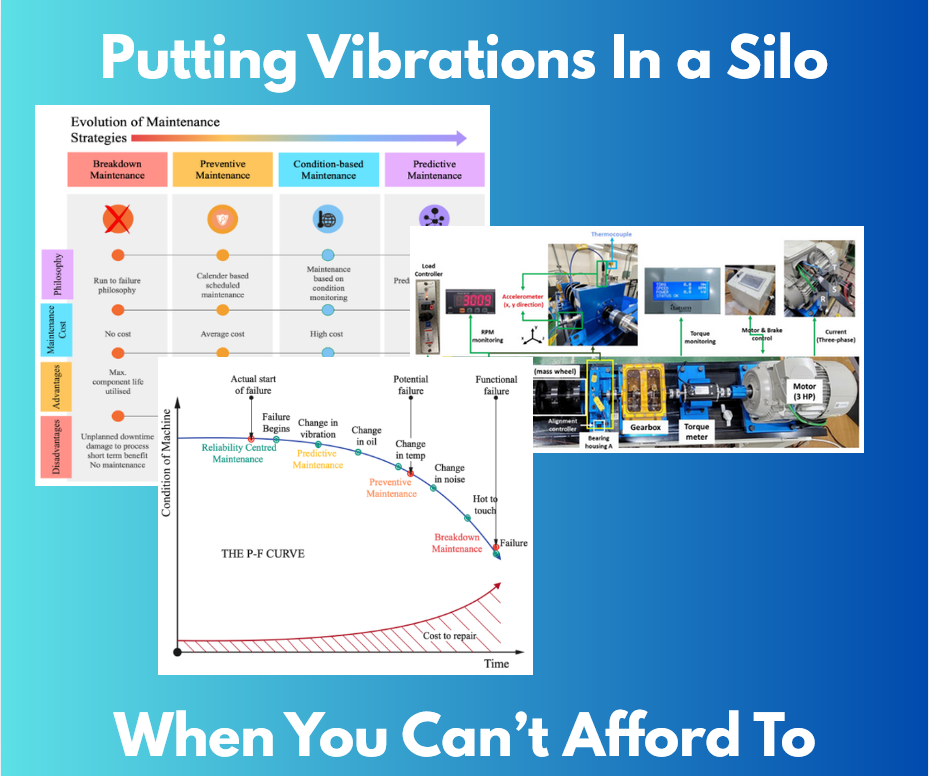
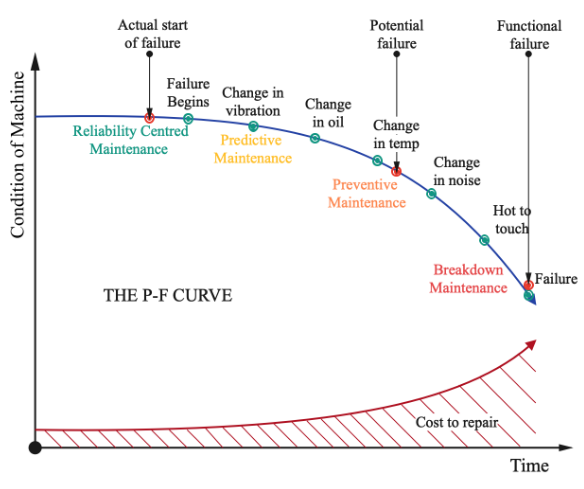
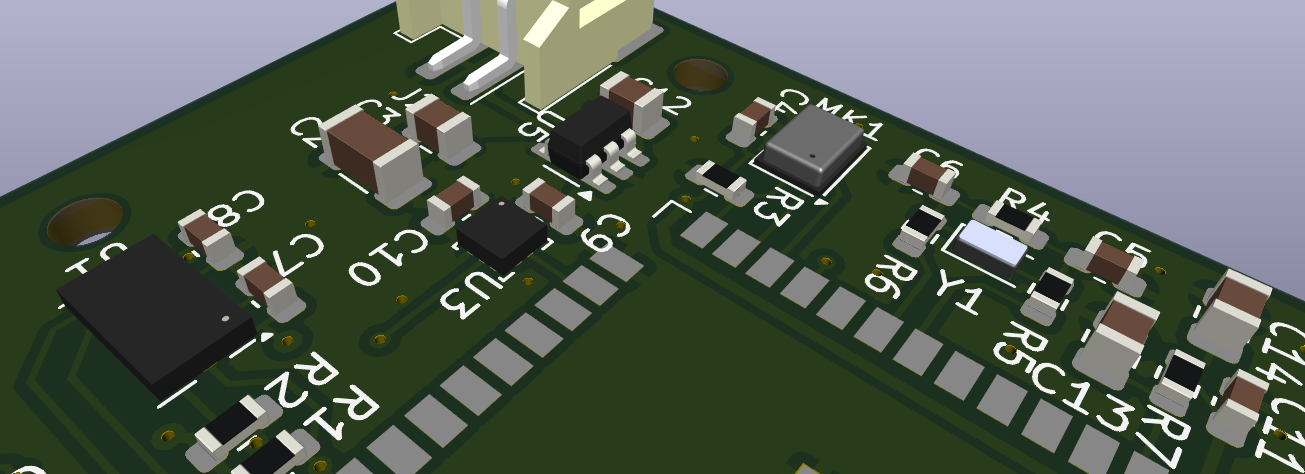
Picture this: you're a reliability engineer. Your job is to keep equipment running, and for a good while, basic preventative maintenance has done the trick. Swap the part on schedule, log the hours, move on. But your machines are telling you there's more going on than a calendar can catch, and the pressure is on to get ahead of failures instead of chasing them after the fact. So you do the responsible thing and invest in some sensing and active monitoring.
That's the moment you fall into a web of problems the industry has known about for years and nobody bothered to warn you about. The biggest one is how your data gets framed. Your new sensors, cheap or expensive, hand you summaries: a vibration RMS here, a band energy there, a crest factor for good measure. Useful sounding numbers that quietly throw out the one thing you actually needed, an honest full capture window of raw data. You get a few isolated stats, none of which build into a coherent picture unless something has already gone obviously wrong.
Now push it further. Say you set out to build an ML model to predict failure. Your dataset only ever says "this is what failure looks like," stitched together from a handful of samples that were designed to wave a red flag at the model. See what's missing? You've gathered data with no base truth. It demonstrates what "not working" looks like, and it can never tell you why. You end up the person most responsible for the machine holding the least usable information about it.
To be fair to contemporary industry, edge feature detection and extraction is cheap, bandwidth light, and storage-light, it fits a bygone era of business where compute and models weren't at a modern level of build. It's the approach Tractian, Augury, and Fluke are all built on, and low cost sensors deployed at massive scale make a rational example of what to do. But at Innova-Harmonics, we're attempting to upend this means. "Hey whoa, you're against cheap sensors?" Now don't go putting words in my mouth. I'm just saying that the technology of this use case has progressed to allow for economical decisions in the world of demanding more from our sensors, models, and data pipelines. We can still hit cheap sensors, storage of data, and keep within bandwidth expectations, we just have to use devices made after 2018. Crazy, I know. A feature can be computed from a waveform, but a waveform cannot be reconstructed from features. This means that a moment of machine behavior is gone forever after the feature is made, this ultimately culminates in terabytes and billions spent on junk by our equivalency of data expectations. When a bearing fails six months from now, Tractian, Augury, and Fluke each have a sparse trail of summary stats which lead to the examination of that failure. We keep a full record, and know exactly what happened. How's that for upending tradition?
Let me make that irreversibility visceral, because "we keep the full record" reads like a slogan until you're standing in front of a machine it actually saves. So picture the thing that keeps you up at night: a steam-jacketed kettle on the cook line. Steam sits in the jacket under pressure, an agitator turns through the product on a shaft seal, and a stack of gaskets holds the whole hot, cycling assembly together. It heats a batch, it cools, it heats the next one, every shift, all day long. When one of those seals starts to go, you get steam pushing where it shouldn't, or product weeping past the shaft, or a scald risk and a scrapped batch and a line down at the worst possible hour. This is exactly the machine you want to see coming, and it's exactly the machine the scalar playbook is worst at.
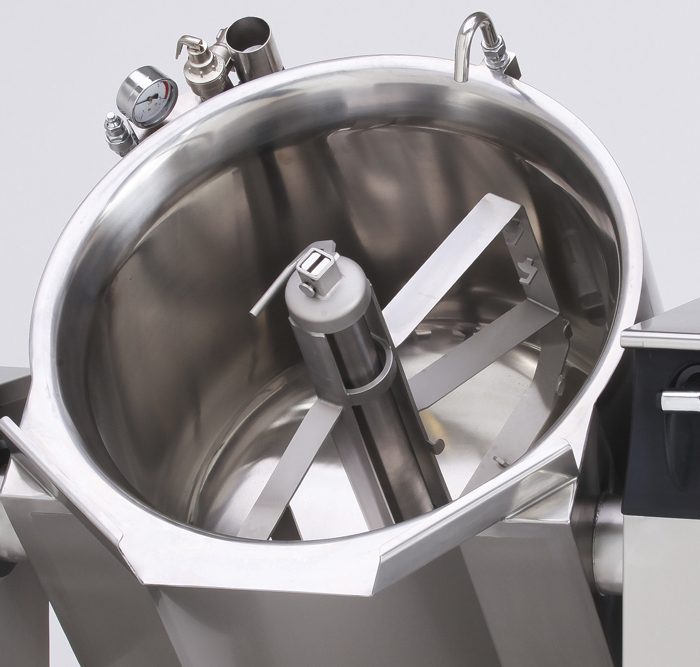
Watch how the off-the-shelf approach falls apart on this one kettle. The obvious move is to listen for the leak, and there's real physics under that: a pressurized seal starting to fail radiates broadband ultrasound, turbulent flow through a small orifice peaks somewhere in the 25 to 50 kHz range, right inside what the Octopus mic covers, so leak onset should show up as rising ultrasonic energy in a band where a healthy machine is quiet. Beautiful in a lab. On your floor it drowns, because the plant is full of pneumatic valves, air tools, and drive-switching artifacts screaming in that same band, and "the healthy machine is quiet up there" is simply false where you actually work. Push to the smarter idea, watching how vibration crosses the seal like a spring-damper across an interface, and you hit the next wall: the elastomer's stiffness swings with temperature, so your feature moves every time the kettle heats and cools even when the seal is perfectly healthy. Then operating point piles on, since the kettle runs wherever production needs it that shift, so you may never see the same condition twice under controlled terms. Every one of these is a fair objection. On a band-RMS platform, every one of them is where the tool quietly gives up and starts throwing false alarms, and false alarms are precisely how a monitoring pilot loses trust and dies.
Here is where keeping the waveform stops being a philosophy and starts paying rent. Take the temperature problem, the one that looks fatal. Thermal stiffness change is fast and reversible, so you cool the kettle and the feature comes right back. Aging, compression set, and chemical attack are slow and irreversible, so that feature ratchets and does not return on cooldown. You stop chasing an absolute number and start tracking the warm-up and cool-down loops of feature versus temperature: a healthy seal traces that loop reversibly, a degrading one traces it with a growing offset. The kettle's own thermal cycling becomes a diagnostic probe you get to run every single batch, and the confounder that killed the scalar approach turns into your cleanest signal. The noise problem gets the same medicine. Rather than trusting an absolute level in a loud band, you track amplitude and phase relative to the shaft's own forcing tone, which makes the machine its own reference and leaves the room's racket out of the measurement. And the operating-point problem dissolves the moment you let a few weeks of raw vibration build an unsupervised map of the handful of states the kettle really lives in, then only ever compare like to like inside them. None of this is exotic. All of it requires that you kept the raw waveform and can regenerate the analysis against a temperature and operating-point baseline that stretches back weeks. Throw the waveform away at the edge and there is nothing left to run any of it on.
— The irreversible half of that split is standard elastomer-failure material: heat drives cross-linking that permanently stiffens the polymer, and a seal with compression set "retains a flattened cross-section instead of returning to its original profile." See Thermal Aging vs Chemical Attack: Diagnosing Elastomer Seal Failures, Global O-Ring and Seal.
Our bet is simple, get to the waveform and the rest will follow. We get algorithmic hindsight, and can build a real understanding of why and how things happen. This is a simple statement: a fault signature undetectable with today's models and methods may be trivial by a 2028 model, raw data lets you build more sophisticated systems of examination than that of feature sets. We've already seen this demonstrated in models even 6 months apart with the likes of Fable and Opus from Claude, imagine what a Fable 6 or GPT 5.8 or something. When a problem happens and a present or future model makes for an easy examination of modern data, you can sweep that model across the older datasets which then get us powerful information that groups like Tractian and Augury simply can't get. Say that kettle finally lets go a year from now. We can walk the entire run-up at full fidelity, find the earliest whisper of the seal drifting, and that lesson enriches every kettle in the fleet, not just the one that broke. Time can't be reversed, and once that feature set is made, modern models will glimpse over the older data without a second thought simply for the fact that the older data cannot contain that which is useful to modern infrastructure.
Now put Tractian, Augury, or Fluke in front of that same kettle. The thermal-loop feature needs a history of full transfer functions recomputed against seal-local temperature. The shaft-referenced tracking needs the raw signal to estimate speed and resample against it. The operating-state map needs weeks of waveform to cluster. A platform that logged one scalar band-RMS every few seconds structurally cannot compute a single piece of that, and it never will be able to, because the raw moments it needed were deleted the instant they were measured. This is about as canonical as it gets for a diagnostic that's only available to whoever preserved the raw data. And notice the incumbents don't sell seal condition today, they lead with bearings and imbalance. That silence is consistent with the physics being hard, and it's equally consistent with a data model that structurally can't support the diagnostic, which happens to be our entire thesis.
They wouldn't dare follow here anyway, for the simple sake that they'll prove us right and more competent at their game while simultaneously invalidating their historical journey of gathering data. Structurally what they've spent years building would be wrecked by our datasets. Unit economics like the cloud cost model, installed bases around the world, and re-architecting completely destroy what they've built. For us, we just built it to modern expectations and future proofed for tomorrowland's AI/ML tech. Every lick of data we gather becomes valuable in perpetuity, and for partner integrators, OEMs (original equipment manufacturers), and future prospect platforms like Marel/JBT, we have a layer that they can build on, not compete against. Our competitors hold their cards close to chest because they think they have cards worth holding. We're proving them wrong with each passing day, and each packet update from an Octopus. Imagine what we'd do with future products, future verticals, future examined data sources and machines. That raw dataset can help design products we haven't even thought of yet which just makes the platform even stronger. It's a matter of when.
So let's get back to pretending you're that reliability engineer. For months you've been inundated with "cheap" sensors sitting on platforms that never once let you harness your own data in a way that mattered. You've sat through all the media buzz about how AI is going to change your industry, and all you've actually seen is another pitch from Tractian, Augury, or Fluke, more expensive promises with no practical upside on the floor. Then it finally clicks. For the first time you're working through a dataset you understand at the root layer, the real story of what's happening on your machine, time synchronized and organized, and the models you're running are trained on the physics of the thing instead of some consultant's inference about it. That kettle you used to babysit warns you weeks out that a seal is drifting, on a quiet Tuesday, with room to fold it into a planned changeover instead of a 2 a.m. scramble. You put the right sensor, the right model, and the right dashboard in place, and the whole job gets lighter. The conversations with your maintenance team, the updates to your plant managers, the negotiations with production over planned downtime, all of them get easier, because all of them trace back to ground truth you can actually follow down to the waveform. That's what your partners in data are for. That's why we built Innova-Harmonics.